That Hidden Fee on Your Mortgage PMI and the Cost of Homeownership
Truth is, porches and paint samples fill your head when scrolling homes late at night. That odd artwork from Grandma needs a wall somewhere. Floor plans matter more than codes then. Where the couch fits becomes the real concern. Letters like ROI or FHA fade behind curtains of imagination.
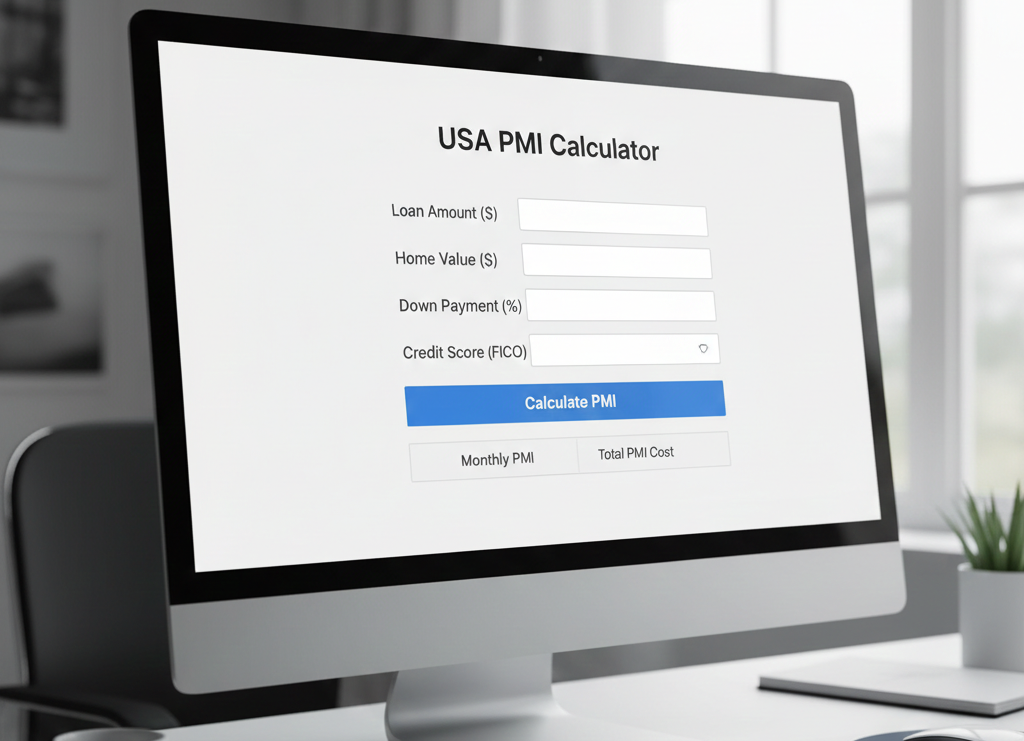
PMI Calculator
USA Mortgage Standard
After that, you meet a mortgage broker. Suddenly it’s like decoding a secret language – PITI shows up, then LTV slips in, followed by PMI tagging along.
Paperwork tucked in a drawer. Numbers on a screen hum softly under fluorescent light. Yet when fingers trace monthly totals, something shifts. A breath catches at what remains after rent, groceries, fuel. That gap whispers doubt each dawn. Protection kicks in before dreams reach breaking point
This isn’t merely a piece on math. What lies beneath is movement – how far you’ve come versus the threshold you’re straining toward. The price tag hides not in numbers but in almost reaching, yet still outside, hand hovering near the knob.
The Why Your Shield That Protects the Bank Not You
Fifty grand is what they want to borrow, yet their savings sit at fifteen thousand – just five percent. Suppose payments halt; foreclosure follows. Selling the home then may fall short of repaying everything owed, particularly should prices drop. Risk climbs when value slips below debt.
Luckily, owning under two tenths of your house right away means lenders want backup – so they require coverage. That’s what PMI does. When payments stop, the lender gets compensated through that plan. Each month you pay it, you’re showing trustworthiness, regardless of how thin your savings look.
Far from helping you, it’s simply what you pay to make owning a home feel less heavy. Crossing that threshold takes more than desire – it demands this fee as passage.
The Heart of the Matter Different Loans Different Stories
This moment makes things feel personal. Depending on your loan, the path of your PMI unfolds differently.
The Conventional Loan You Can Let Go Eventually
This story feels familiar. A ten percent down payment gets you started. Each month, another hundred fifty dollars covers the PMI cost. Bills go out on time. Sometimes a tax check shrinks what you owe. Over time, value creeps upward. That moment arrives – when equity hits twenty percent, a phone call does the trick. Say it loud: “Drop the PMI.” Out the door it goes. Not forever, just long enough to matter. When that line vanishes from the bill stack, breath comes easier. Progress feels real, quiet, solid.
The FHA Loan Maybe Forever
Funded by the federal government, these loans win favor thanks to lenient credit rules and small upfront costs – sometimes just 3.5%. Yet there’s a catch: borrowers pay MIP, short for Mortgage Insurance Premium. Here’s what stings most – drop below a 10% initial payment, and that fee probably sticks around until the mortgage ends. Picture handing over an added $200 every single month. Lives inside the deal till you move out through sale or new loan terms. That’s what it costs just to step across the threshold.
The Va Loan A Quiet Benefit For Veterans
Veterans and active-duty folks get something solid here. Zero private mortgage insurance – never charged. A quiet thank-you built in. In place comes a single funding charge, usually added right into what you borrow. Totally another route forward, missing that usual monthly weight.
The USDA Loan The Country Road Story
Folks living way out where the roads get quiet might skip the down payment entirely. Much like FHA loans, borrowers pay mortgage insurance from day one until the very last payment. That steady cost buys wide-open space, fences stretching far, clouds passing slow overhead.
What Determines Your Rate? It’s Personal.
Few people realize PMI varies by person. To an insurance company, your financial life shows up as digits on a screen. That string of numbers? It stars one figure above all – the number tied to your credit history.

Here is a different take on that idea
A score of 780? That’s top tier. Your history stays clean, no red flags anywhere. Lenders see that – they offer lower pricing, sometimes cutting interest by up to four-tenths of a percent yearly. Trust builds slowly, yet here it shows. Money moves easier when numbers speak this clearly.
A bumpier road lately might explain that score near 680. A missed due date here or there adds up, especially when times get tight. Lenders notice those slips, so your interest could sit around 0.8% to 1.0%. Not alarming, but definitely not ignored. They view you as someone needing closer look.
A score of 620 means you are recovering from money troubles. Lenders see higher risk, so rates jump – often above 1.5 percent. Protection for them drives those costs up. The climb out isn’t fast, but progress counts. Rates stay steep until trust builds again. Every payment helps shift the balance slowly. Higher charges now reflect past slips, not current effort. Time and consistency begin to tip things later. Starting over takes patience, that hasn’t changed. Slow motion wins here, step by narrow step.
Lives behind that digit are choices made long ago. When payments stayed on time, trust grew quietly. Fewer stumbles mean smaller fees ahead.
A bigger down payment often means lower rates – going from 5% to 15% can shift things noticeably. Property kind plays a role too, whether it’s a condo or standalone house. Location matters just as much, sometimes more.
The Pmi Calculator Sees Beyond Numbers
This changes how we feel – some find strength here, others stress. Not every PMI calculator gives back a flat figure. Instead it shapes tomorrow into something you can picture.
You plug in:
The Dream: That home price you keep circling.
Lying around in your account? That is what counts toward the upfront home cost. Money sitting there, ready – nothing promised, just real numbers showing up when it matters.
Your money story: how lenders see you, what you owe.
It whispers back:
Imagine spending $173 every month without getting anything back. That amount could cover a reliable used car’s full cost over time. Think of fresh food filling your kitchen each week – gone just like that. Real money, moving out the door.
Seven years plus four months. That is how long until you hit twenty percent ownership. Suddenly there is a finish line. Something ahead that feels like daylight. Could it come sooner? Imagine sending an additional hundred dollars every month straight to the balance. The tool recalculates. Fourteen months vanish into thin air.
That $15,200 in PMI adds up fast. Picture it – replacement shingles on your house. Flights, pasta, cobblestone streets in Tuscany. Or cash sitting ready when things go sideways. Suddenly, waiting twelve months feels less like delay, more like strategy. What if stashing extra now avoids handing over thousands later?
A different version of events unfolds when numbers shift slightly. Picture a life where scores climbed by forty marks. Imagine stepping through doors priced twenty-five thousand dollars below today’s reach. Tension eases as possibilities take shape in quieter forms.
The Real Human Ways Past Numbers
Numbers behave. Choices rarely do. This is how folks actually act
The Grinder moves fast. Not waiting, they put five percent down, take on PMI without hesitation. Instead of spending, each extra check – holiday bonus, gig work cash – slips straight into the loan. Payments pile up quietly, steadily chipping away at what they owe. Four years pass, not nine, before ownership hits twenty percent. That insurance? Never seen as a burden. More like rent paid to themselves while building something solid.
A person who likes practical solutions might try splitting the home financing into three parts. Instead of one big loan, they go for a primary mortgage covering four-fifths. A separate ten percent comes from a secondary loan. Ten percent gets paid upfront as cash. Private mortgage insurance drops out completely this way. Juggling two debts isn’t ideal – yet still makes sense under certain conditions. The setup feels like balancing acts on paper, though it holds up when tested.
One more year stretches ahead, eyes fixed on the $15,000 PMI they’d avoid by waiting. Rent feels heavy now, each month a step toward that 20% mark. House values climb faster than savings, making stillness feel like falling behind. Patience wears thin while numbers rise on listings they check too often.
A few start off using an FHA loan, stuck with lifelong mortgage insurance just to get approved. After twenty-four months of fixing credit scores and gaining home value, a switch comes – moving to a regular loan without extra fees each month. This path takes planning, yes, but also patience. Step one leads to step two when timing lines up right.
The Bottom Line Is Your Story
Beyond right or wrong, PMI just exists. One way to look at it: a feature with price tags attached. Sometimes you pay quietly. Balance shifts when it shows up.
Some see it as the thing that opens the door way earlier, each dollar justified by steady walls and standing tall. Others feel stuck carrying a weight, handing cash month after month just because lenders stay unsure.
Take a seat first thing. Grab an actual PMI calculator – nothing vague. Type in your exact figures, nothing guessed. Watch how the monthly number shows up on screen. Notice when it finally ends, that date staring back. Only then start wondering about the rest – the stuff formulas miss
How much does it help me to begin growing value today?
Worries pile up when thinking about another payment hanging over months ahead. That added cost might weigh heavier than expected down the road. Bills stretch longer when new charges stick around year after year. Pressure builds quietly with each reminder arriving by mail. Feelings shift once numbers start dictating daily choices.
Could the rise in prices outpace what I’d pay through PMI if I wait too long?
Your house means more than dollars. Inside these walls, tears fall, birthdays unfold, little voices grow loud, sometimes silence fills every room. That monthly fee tagged onto loans? It acts like invisible glue keeping the whole thing standing. Learn how it works, run the numbers carefully, after all is clear pick what feels steady when night comes and lights go out – no matter which front door leads there.

Ahad Tech is a proper website name which is run by Mohammad Abdul Ahmed and in this website you show proper guide step by step to all exclusive content because i have experience of 13+ years of web development field and proper coder. we strive to turn our passion for Technology, Educational & Information into a thriving website to help people with daily needs.