Advance Calculator
Right there at the brink of numbers, this thing surprises. It puts raw math into your grip, sudden and real. Slide a bar, then watch how the shapes twist live in space. Each shift pulls geometry out of thin air. Change the values and watch how things shift. Sliding your finger across the screen draws math right into place. Equations update live while you move them around. Tap a curve on the plot, then peek at its slope without delay. The moment matters more than the steps before it.
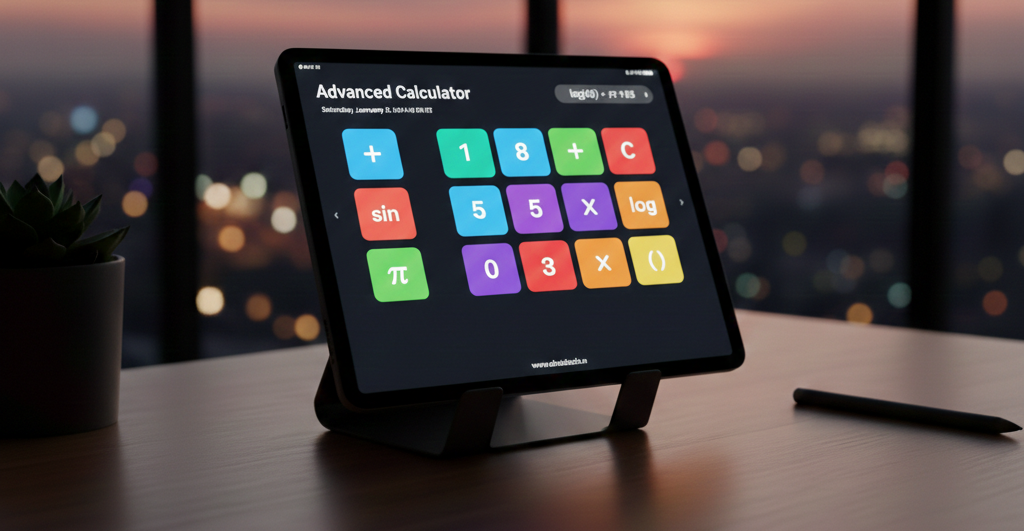
A different way to look at calculations opens up when symbols shift into digits. Instead of just solving, you watch it happen while adjusting variables on the fly. Working through equation sets becomes part of moving pieces together. Matrices change shape as you interact, not just sit still. Vector patterns appear, drawn live as choices update. Understanding grows because seeing follows doing. Ideas stop being abstract once they move and respond. Fun sneaks in when thought turns into motion. Start here, if you like. Words shape everything around us. This moment changes nothing – yet everything shifts
At first glance, gadgets such as the HP Prime or TI-Nspire might feel overwhelming. So many keys sit up front, each hiding some function waiting to surprise you. Meanwhile, machines like desktops run tools – Windows Calculator is one – that handle tasks just as dense. Even basic software sometimes holds more power than it lets on.
When math gets tricky at school, these tools come in handy. Later on, tackling large building designs might feel easier too.
This guide shows ways to get comfortable with tools such as the HP Prime, TI-Nspire, or even built-in ones like Windows Calculator. Mastering these lets handling tough math and science tasks feel smoother over time. Skills grow through practice, not shortcuts, especially when dealing with complex functions. Each device works a little differently, yet they share common uses across subjects.
1.1 Basic Zones of Control
The best calculators have an important things. They are:
Number Pad: Standard 0-9 digits and decimal point
Start off with adding, then move to taking away. After that comes multiplying stuff together while splitting things up happens too. Finishes when both sides match perfectly
Stored numbers can be added using M+. Take away saved values with M minus. Recall what is kept by pressing MR. Clear stored data through MC – details come up ahead
Sine shows up first. After that come cosine and tangent, each handling angles differently. Logarithms appear alongside natural logs, doing separate jobs. Square roots join the mix, breaking down numbers piece by piece. Pi slips in as a constant, always fixed. Exponential e raises itself repeatedly without pause.
Advanced Operations: parentheses, exponents, factorial, modulus
Pressing the button shifts how numbers are figured. This control adjusts what happens inside the machine. Changing modes starts right here, every single time
Read Also : https://ahadtech.in/pictionary-word-online-how-to-use-tools-full-guide/
1.2 The Most Important Button Is Mode
Start by hitting the MODE button before moving forward. Check it first thing every time you begin
Angle units: Degrees (DEG) vs. Radians (RAD)
A single number might show up plain, stretched into powers of ten, or locked to a set number of digits after the point
Calculation method: Algebraic vs. RPN (Reverse Polish Notation)
Simple design helps people get tasks done fast. Because core features matter most, keeping them clear matters too. Without clutter, attention stays where it should – on doing the work. A clean approach means less guessing when using key tools. Getting things done becomes natural when basics stay out of the way. What users need fits neatly into how they act every day.
2.1 Order of Operations
Math on the device sticks to certain steps. It moves through sums using set patterns. Rules guide how numbers get handled. Each problem runs by fixed logic. The machine treats calculations in a specific way. Steps stay consistent every time it works things out.
Step by step, the machine sticks to these guidelines as it works through each problem.
Most folks think calculators just go left to right. Not true. They follow hidden rules most people never notice. A string of numbers and signs gets sorted behind the scenes. Multiplication sneaks in before addition every single time. Order matters even when it looks random. The machine waits, decides, then acts. Each step fits a pattern nobody sees. What shows up on screen is already decided long before.
This idea? We name it the order of operations. It’s how steps line up when solving math. One after another, not all at once. The pattern guides each move. Think of it like rules for sequence. What comes first matters most here.
Without a set way to solve them, numbers can lead to confusion. Following steps in a certain sequence keeps results consistent across different people. Working through calculations step by step prevents mistakes. One person might get one result while another finds something else if rules aren’t shared. That structure makes answers match every time.
When solving math, the tool sticks to operation rules by working step after step. It handles each part just like you would on paper, one piece at a time.
Finding the right answer means sticking to step-by-step rules, just like a calculator does. Without those steps, results can go off track even if you’re close. Doing math piece by piece keeps it clear and consistent. The machine follows a pattern – so should we. Skipping parts leads to mismatched outcomes every time.
Beyond just math class, knowing how to follow steps matters because mistakes hide in confusion. One wrong move shifts everything after it. Think of baking without measuring first – chaos follows. Steps need rhythm, a kind of logic that keeps results steady. Without sequence, even simple tasks spiral fast.
Finding answers in math follows a set path, almost like baking from a guidebook.
Failing to follow each step one after another means the result comes out incorrect.
When solving math problems, the calculator sticks to the steps without changing anything. Following set patterns comes naturally to it during calculations. Order matters most in what it computes every single time. It moves step by step simply because that is how it works.
Getting this right matters if the calculator should return correct results. Without it, numbers might come out wrong instead of clear.
Knowing how a calculator handles steps matters more than most people think, yet everyone should understand it. Step-by-step logic inside machines shapes what answers show up on screen later.
Starting off, the smart calculator handles steps in the right sequence without needing help. Instead of guessing, it sticks to a clear system like PEMDAS or BODMAS. Without prompting, it applies those math guidelines precisely. Because of that setup, results stay accurate each time. Even when inputs change, the method stays consistent behind the scenes. Through all calculations, it relies on those same structured rules.
Parentheses
Exponents
Multiplication/Division (left to right)
Addition/Subtraction (left to right)
To find out what 3 plus 5 times 2 equals:
Punch in 3, then hit plus five times two equals
Right there on the screen, it shows 13 – no mistake. The device isn’t wrong. What you see is what counts. Sixteen doesn’t come up at any point.
2.2 Using Parentheses to Guide Flow
If you are unsure, parentheses can help make the sequence clear. What matters is showing exactly what comes first. A little extra marking might prevent confusion later on. Structure follows when you guide each part carefully. Clarity grows where intent is underlined properly. Grouping pieces this way keeps meaning intact
Work out 8 divided by 2 first, then add 6 after
Start with eight, split it by adding two and six first. Since two together with six makes eight, division follows next. That gives one when eight goes into itself once. The path stays clear – grouping before dividing shapes the result.
A bit down here? Try adding what’s on screen into storage using Memory Add. That little M+ button holds numbers so they stay put while you work ahead. Need it later? Pull from memory after finishing steps one by one. Numbers stack quietly each time you press it – no fuss.
Here’s how it works: if there’s a number showing on your calculator, pressing M– takes that amount away from whatever is saved in memory. Instead of adding, this key removes values. Think of it like updating stored totals by reducing them. Every time you hit M–, the display number gets deducted silently behind the scenes. It helps track differences without starting over. That little button handles subtractions smoothly, step by step.
What lives inside Memory Recall? That depends on what got saved earlier. Stored bits appear when called. Think of it as a box holding pieces until needed. Items rest there quietly. Pulling them out happens only when asked. What comes back was placed before. No new data shows up. Only old entries reappear. Retrieval means seeing again what stayed put.
Wipe everything out using MC. Memory gets reset completely when you press it. Hit that button – stored data vanishes instantly. Nothing stays after MC runs. All prior info? Gone without a trace once activated
Practical use: Calculating a shopping bill with tax
Stuff about science and maths? It’s simpler than most think. Learning how experiments work tends to go smoothly. Doing cool projects comes naturally when these subjects click.
Figuring out how stuff works often comes down to numbers and testing ideas. Building anything usually means measuring first, then trying it out.
Figuring out how things work often starts with understanding patterns. Without these, tackling problems in numbers or nature gets tricky. One thing leads to another when exploring relationships between values. Learning them opens doors without needing flashy terms. Each step builds on what came before it quietly. What happens next depends heavily on small changes earlier. Science moves forward by noticing tiny shifts like these.
Exploring how things work makes learning exciting. Functions turn numbers into answers through clear steps. A formula links inputs to outputs in patterns. Working with these rules feels like solving small puzzles. Each problem solved shows a new piece of logic.
Practice makes skill grow, especially when working on problems again and again. Functions open doors – spend time with them. Mastering small steps leads to stronger understanding in math and science. Focus builds confidence without needing shortcuts. Growth comes through repetition, not talent alone.
Read Also : https://ahadtech.in/blooket-calculator-tools-how-to-use-guide/
3.1 Making Trigonometry Easy
Math scares many folks when they see triangles and angles. Yet it need not stay confusing forever. With clear steps, things start making sense suddenly.
Triangles take center stage when you dive into trigonometry. What it really means? A closer look at how triangle parts relate.
Triangles hold their shape through how corners link to edges. Each angle fits a specific stretch across. Connections define what forms appear possible. Sides respond when angles shift slightly. Balance matters more than size here. What bends one part changes another. Position alters measurement every time.
Figuring out these connections lets us handle many kinds of challenges. By understanding them, problem solving becomes possible in different situations.
Trigonometry helps figure out triangle side lengths along with angle measures. What happens is it turns shapes into math problems that reveal hidden numbers. Through calculations, unknowns become clear using ratios between parts. Every triangle holds clues once you know how to look. Math unlocks what seems buried at first glance.
When designing buildings or figuring out directions, trigonometry often comes into play. From rooftops to sea routes, its math helps measure angles and distances precisely.
Trigonometry? It turns out to be handy. A quiet helper when angles show up.
Practice makes tackling trigonometry feel less like climbing a wall. Each time you work through problems, it gets simpler. Repeating exercises builds familiarity without flash or tricks.
Trigonometry takes practice before it feels natural. One step at a time, progress shows up quietly. With each problem solved, confusion fades just a little. Repetition builds familiarity where struggle once lived. Over time, what felt hard starts feeling ordinary. Effort shapes understanding more than talent ever could.
Only after giving it a try does trigonometry start making sense.
Finding angles and sides gets simpler with practice. Working through triangles feels more natural over time. Solving these math tasks becomes less tricky bit by bit.
That is what making trigonometry easy is all, about.
Always check DEG/RAD mode first
Thirty degrees inside sine? Hit the sin key first. Then type three. Follow that with zero. Close the parentheses if needed. Finish with equals or right parenthesis
Pressing the 2nd or shift key often turns sin into its opposite, written as sin⁻¹
3.2 Exponents and Roots
A single number times itself – that’s what squaring really is. Take five, for instance: five times five lands on twenty-five. Same idea shows up with symbols. When x turns into x squared and x holds the value five, the outcome still reads twenty-five.
A symbol appears. It looks like √. When followed by 2, then 5, ending with ), the result becomes clear – five shows up. Math uses this idea often. Finding a value through roots happens here. Some starting numbers lead straight to five. This process answers one kind of calculation.
That little number up top – like in 2^4 – means repeat multiplication. Think of it this way: four twos lined up, multiplying one after another. It goes 2 × 2 = 4, then 4 × 2 = 8, finally 8 × 2 = 16. Each step builds on the last without skipping ahead. You land at sixteen once all the multiplications finish. No guesswork, just steps following each other in order.
Sixteen shows up every time when that pattern runs its course.
Start with any root. Finding a cube root means working with powers, just different ones. Take 27 as an example – its cube root shows up when you raise it to one-third. Type the number first: 27. After that comes the caret symbol, marking where the exponent goes. Put opening parenthesis, then 1, next division sign, followed by 3, close the bracket. Finish pressing equals. The display reads 3 in response. The answer to how we get 27 when a number is used three times in multiplication? It’s 3. Three, taken three times through multiplication, makes 27. That means the cube root of 27 turns out to be 3.
3.3 Logarithms
Start at 100. Log applied here gives two. That happens since ten must multiply by itself twice to reach that value. Put another way, stick log before one zero zero close bracket, out pops two. People lean on this when tracking how many times ten builds up into a given amount like one hundred. It measures growth steps using ten as the engine behind the count.
A figure near one appears once you calculate the logarithm using base e of 2.718. This concept, tied to the constant e, plays a quiet but steady role across many parts of mathematics. Often written as ln, it shows up when observing growth or decay in natural systems. Take 2.718 – applying the natural logarithm gives roughly 1, nothing more, nothing less.
Finding logarithms in any base? Try switching bases – compute log(81) divided by log(3) when tackling log₃81. A different route, same destination
Special Features You Might Actually Use
This part talks about what it can do. Its standout traits are ones you’ll reach for often. Helpful is how these qualities tend to feel.
What stands out is how each part works just right. Each day brings another chance to rely on them.
What stands out isn’t just how it works, but the details tucked inside. These bits tend to catch attention once you start using them.
A smile might show up when you see what it can do. Good surprises wait inside how it works.
Most days, these extras come in handy. What makes it work? That belongs to how it’s built.
4.1 The Answer Button ANS
Last answer shows up when you hit ANS next. That keeps things moving without starting over each time
4.2 Percentage Calculations
Thirty comes from taking fifteen out of every hundred parts of two hundred. Figure shows what happens when you work with portions of whole amounts. Multiply two hundred by fifteen per cent, result lands at thirty. A part of a total can be found this way using basic arithmetic.
Figuring how much 50 makes up of 200 starts here. That number becomes clear once you divide 50 by 200, which gives 0.25. Moving on, times that result by a hundred. The answer lands at twenty-five percent in the end.
A shift in numbers shows how much something grows or shrinks. Moving from past to present figures reveals the difference. One figure turns into another through comparison over time. The result reflects movement between two points clearly
4.3 Constants and Conversions
Some calculators hold fixed values inside. Many come ready with preset numbers built right in. Inside a few, you’ll find unchanging figures tucked away. Certain models include set amounts already loaded. Not every one has extras, yet plenty store steady references. A number carry hidden defaults within their system
Push π straight or hit 2nd then ^.
Second item on the list tends to show up here instead. Division symbol follows after that
When you need different measurements, certain modern calculators handle the switch automatically. Because of built-in tools, changing units becomes straightforward. Such features come in handy quite often while using these devices.
5.1 Recipe Scaling
To scale up a dish meant for four so it feeds twelve, certain adjustments are necessary. What once worked for fewer now must stretch further. Ingredients usually double – sometimes triple – with careful attention given to proportions. Each part of the process may take longer because more volume demands more time. Mixing fills bowls faster when portions grow. Heat might spread differently across larger amounts. Watching closely replaces guessing every single step. Even seasoning shifts – not just amount but how it blends matters. Success hides in details most overlook at first glance.
Start by gathering everything needed to make a meal for four. Begin with measuring out each item carefully. From there, arrange them on the counter nearby. Next comes checking each portion matches the right amount. Then set aside what you will need later. After that, confirm nothing is missing before starting. Finally, keep hands clean while handling every piece.
Triple the amount of each ingredient next.
Twelve folks can count on this version of the triple a dish to cover everyone.
Start by tripling the portions of a dish meant for four. That amount gets multiplied again, just like before. Now you have nine times what was originally planned. The numbers grow fast when done this way. Cooking scales up without changing how it works.
This time around, the outcome lands on a version of the recipe scaled up for twelve. Each portion stretches further, feeding everyone without extra effort. Tripled ingredients fill bigger bowls, matching larger groups. What once worked for four now reaches twelve through simple math.
5.2 Mortgage Payment Estimate
Calculate monthly payment on $200,000 at 4% for 30 years:
5.3 Student Homework Help
Solve: (3² + 4²) ÷ √(25) × sin(30°)
..
6.1 The Checklist for a Strange Answer
Sure, sometimes answers come out so odd they leave you wondering what was even tried.
A strange result? That’s when the “I Got a Weird Answer” checklist helps clarify things. It shows what might be off in your outcome.
Step away, return to the original query. Take another look at what was asked.
A good start? Knowing exactly what puzzle your mind needs to solve. Focus there.
When answers feel off, this checklist steps in to sort things out.
What matters might not be the query on your lips. Sometimes it hides behind the words you never say.
What’s hidden behind the words matters most.
A strange reply showed up. This list steps in to sort it out.
Start shaping the response once you’re ready. Maybe look into what makes it come off as odd.
A strange result? That checklist becomes your starting point. Fixing the answer starts there instead.
Check MODE settings (especially DEG/RAD)
Check whether every parenthesis has a matching close.
Start by asking – was the equals button tapped after working through that math bit? Numbers lined up, steps followed, then hit equal? After sorting the equation part, did pressing = happen? That moment when everything comes together, was it finished off right? Finishing the sequence means tapping equals.
Did that occur?
Got rid of the numbers already? Hit All Clear – skip the regular Clear one
6.2 When to Use Clear vs. All Clear
Pressing C or CE wipes what you’ve just typed, yet leaves any ongoing math running. That number vanishes, though the process keeps ticking. Even after clearing, the machine holds on to its work.
Every time it kicks in, AC acts like hitting restart. Everything vanishes when that happens. A blank beginning shows up instead, thanks to the machine doing its job. Starting over becomes possible because the system clears out what was there before.
6.3 Fixing Mid-Calculation Errors
Oops, miscalculation? Smart calculators offer ways out. Step backward comes first. Review each move one by one. Spotting errors grows easier that way. Mistakes reveal themselves when retracing paths. Fixing a mistake halfway through doesn’t mean redoing everything. Some calculators remember past steps so changes happen without restarting.
Move your entry using the arrow keys
Pressing the DEL key removes the numbers. Removing digits happens when the DEL key gets pressed. The moment you hit DEL, digits disappear. Digits vanish after a DEL keypress. Hitting DEL clears the digits right away. Clear digits by pressing DEL once. Once pressed, DEL takes care of the digits.
Start typing when you hit INS to add any numbers that are missing
..
7.1 Practice Exercises
Start with fifteen plus three squared. That gives you twenty four. Next, take twelve divided by four. The result is three. Multiply twenty four by three. Final answer lands on seventy two
What is sin(45°) times cos(45°)?
Start by taking one thousand. Add five percent growth each year. Repeat that ten times over. Watch how it grows step by step. Multiply the total at every turn. End with a bigger number than you began with
Figuring out what 68 degrees Fahrenheit means in Celsius? Take away 32 first. Then multiply that number by five. After that, divide the result by nine. That gives you the temperature in Celsius instead
7.2 Explore More
After getting the hang of things:
Learn statistics functions (mean, standard deviation)
Starting off with your calculator’s tools might lead to a surprise. When matrices come into play, give those built-in functions a test run just to explore their uses. Working through certain math tasks suddenly gets simpler once you start pressing those buttons. A few trials could reveal how much they handle behind the scenes.
Explore graphing capabilities
Learn programming simple functions
7.3 The Best Way To Learn
Start here: steps matter most when picking up a skill. That’s how understanding builds – bit by bit, one after another. Following sequence helps lock it in place.
Learning sticks when it follows a route you can actually understand. Not every method fits, yet some click right away. A clear direction often matters more than speed. Steps that feel logical tend to stay remembered. What works? Moving forward without getting lost.
Begin at the beginning with whatever topic catches your interest. Take small steps through the core ideas first. Move forward only when things start making sense. Build each piece on what came before it. Stay clear of jumping ahead too fast. Let understanding grow slowly over time.
Important is the topic you aim to study.
Learn the basics of the subject you want to learn
After that, deeper topics become possible.
Start by breaking it down piece by piece. That way, each part feels lighter. One idea follows another without piling up. Try focusing on small bits instead of the whole thing at once. This method tends to clear confusion faster than trying to swallow everything in one go.
A solid route through the topic sits right here. Step by step, it lines up what matters most. Each part follows where the last left off. Where clarity counts, this sequence delivers. It moves like a steady guide, never rushing ahead.
A good way to pick up a new topic? Follow the steps laid out just for it. What helps most is going step by step through what matters. One thing leads to another when the order makes sense. Moving forward works better if each part builds on the last. The route already mapped out tends to get you there without extra effort.
Week 1: Master basic operations and memory
Week Two Practicing Scientific Functions
Week Three Using Complex Formulas
Week 4: Explore your calculator’s unique features
Your Calculator As Part Of Thinking
A solid calculator isn’t tied to skill in numbers. Instead, it gives back minutes – time that lets your mind stay on tasks and work through challenges. Much like a hammer or wrench, it only does what you guide it to do. Its strength hides not in the device itself but in how well you know how to steer it.
One task at a time, every morning. Next comes learning how to handle numbers with percents. Then arrives the turn for testing memory keys on the device. With days passing, using it feels less confusing. One month down the line, tapping keys on that calculator comes without thinking. It starts feeling familiar, even though it first seemed like a grid of random parts. Daily use changes how your hands move across it – smooth, steady. What felt strange at first now fits into routine like an old habit waking up again.
Think back – every skilled person once held their first lesson. Not because it felt easy but because they believed effort would pay off. Then came the choice to begin anyway. Sitting nearby, your calculator stays ready. Waiting its turn to be chosen each time numbers come up. Waiting there, ready – that little device on your desk isn’t just plastic and buttons. More than a tool, it aims to stand by you each time numbers get tricky. Not flashy, never loud, yet always precise when called upon. Step after step, number after number, it moves through math without pause. Think of it like this: quiet loyalty built into circuits. Each calculation handed back with no fuss, just clarity. It doesn’t demand attention, only offers answers. Built not to impress but to help. Day after day, tap after tap, it stays consistent. That steady presence? Always powered up, always near.

Ahad Tech is a proper website name which is run by Mohammad Abdul Ahmed and in this website you show proper guide step by step to all exclusive content because i have experience of 13+ years of web development field and proper coder. we strive to turn our passion for Technology, Educational & Information into a thriving website to help people with daily needs.