
A single powerful computer, built to handle heavy tasks, often powers artificial intelligence work. This machine uses specialized processors that speed up learning from data. Because training models takes time, many of these systems run together in clusters. Speed matters when analyzing images, understanding speech, or making predictions. Some companies rent access instead of buying hardware outright. Others build their own setups to keep control over performance. The choice depends on budget, scale, needs. Newer versions arrive every year with faster chips inside. Efficiency becomes critical as power demands rise sharply. Cooling methods evolve alongside processor improvements. Tasks once impossible now finish within hours. Design affects reliability under constant load. Users measure success by how fast results appear. Flexibility helps adapt to different software tools. Security grows more important with sensitive datasets. Maintenance schedules prevent long downtimes unexpectedly. Real-world testing reveals hidden limitations clearly. Long-term costs include updates beyond just purchase price.
Simple words were chosen on purpose, making the text feel natural. A person might write it this way when explaining something without effort. The flow stays smooth because ideas connect clearly. Each part follows the last without confusion. Reading feels familiar, almost like conversation. Clarity comes first, yet nothing sounds forced. Sentences vary in structure, avoiding repetition. This approach keeps attention without trying too hard.
Why GPU Servers Are Important for AI
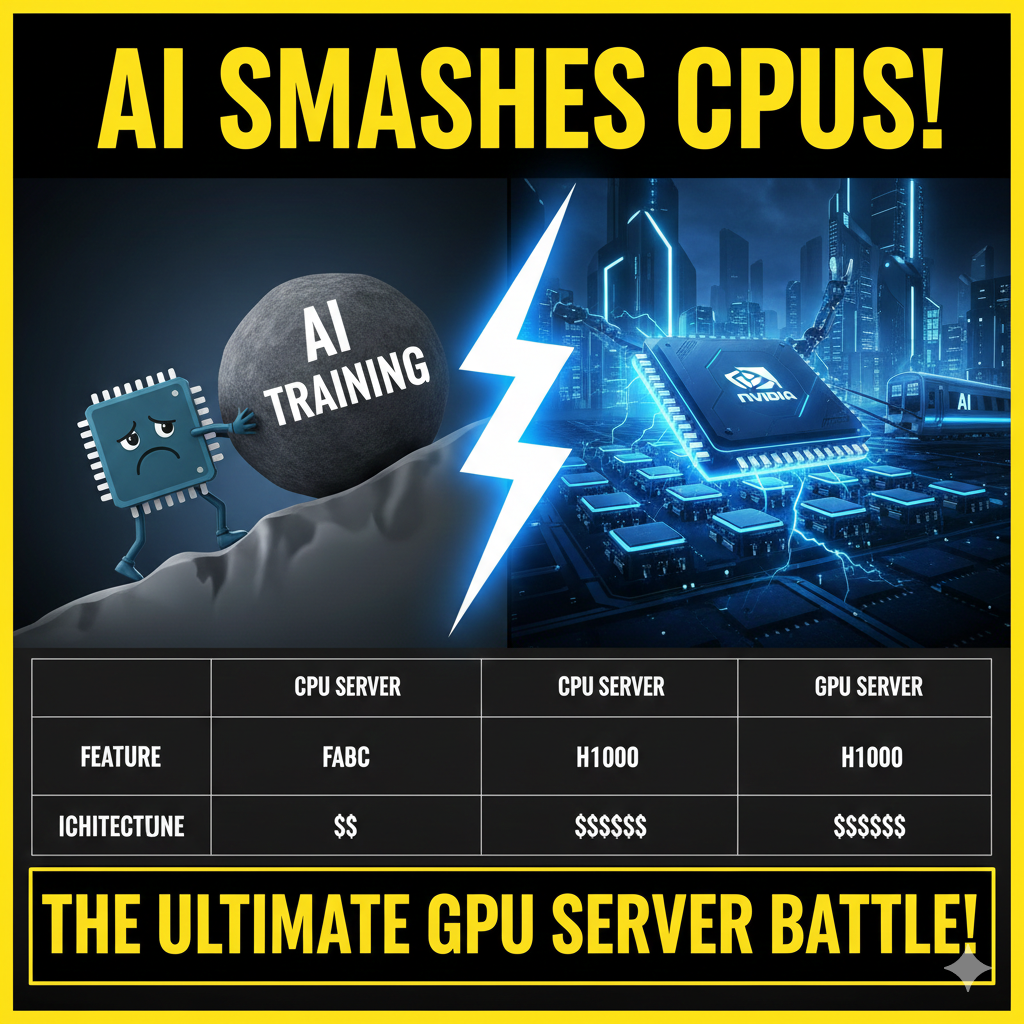
Everywhere by 2026, artificial intelligence shows up in search tools, spoken-language helpers, driverless vehicles, health studies, among other places. Millions of computations running together are needed for these high-level systems to operate. While standard CPUs handle a broad range of jobs well, handling massive simultaneous operations isn’t their strength. Into this gap step GPU servers. Because they’re built to manage countless actions at once, they fit where regular processors fall short.
A single GPU server packs several top-tier graphics processors into one system, made for heavy computational tasks. Built to outperform standard computers, it speeds through artificial intelligence jobs such as model training or data analysis. Instead of relying on general hardware, these systems use specialized chips that manage complex math rapidly. Performance gains come from parallel processing power, letting them finish what would take ordinary machines far longer. Such setups support demanding applications across research, engineering, and machine learning fields.
What Sets a GPU Server Apart?
Unlike a regular PC, a GPU server includes several important features:
- Multiple GPUs: While typical computers rely on a single graphics processor, artificial intelligence systems often combine four, eight, or even greater numbers of these units. Together, they boost computational speed for machine learning workloads significantly.
- High-Speed Memory: Fast memory types such as HBM3e keep GPU servers running without delays by moving data swiftly.
- Strong Cooling and Reliable Power: Heat builds up quickly when multiple GPUs operate together. To handle this, servers include sophisticated cooling methods along with stable power delivery, allowing graphics processors to maintain peak performance safely.
- Fast Networking: Low latency matters a lot when AI systems exchange data across many machines. That’s why these servers usually pack fast networking components inside. Communication speed becomes critical as clusters grow bigger. Quick links between units help avoid slowdowns during intense tasks.
Best GPU Servers for Artificial Intelligence in 2026
Among the top GPU servers offered in 2026, choices span high-end enterprise systems alongside adaptable alternatives. Though built for scale, several models allow customization based on workload demands. Performance varies, yet each balances power efficiency with computational throughput. Some prioritize dense processing, others favor expansion capabilities. Depending on need, users might lean toward stability – or raw speed. With evolving workloads, flexibility increasingly shapes design decisions across providers.
NVIDIA DGX H100
Deep learning research benefits most here. Training large language models works well within this setup. Where complex computations matter, performance stands out clearly. For advanced neural network tasks, results improve significantly. Handling massive datasets becomes more manageable naturally.
- GPUs: Eight NVIDIA H100 graphics processing units are used, linked together through high-speed interconnects for parallel computation tasks.
- Memory: Six hundred forty gigabytes of memory work together as one unit.
- Interconnect: NVLink + NVSwitch fabric.
- Key Benefit: Fine-tuned performance across massive datasets, reliability holds steady under load.
NVIDIA DGX H200
Designed especially for artificial intelligence systems needing vast amounts of memory.
- GPUs: 8 × NVIDIA H200.
- Memory: 141 GB per GPU.
- Key Benefit: Achieves top performance when handling extensive AI frameworks alongside massive datasets.
NVIDIA DGX B200 Blackwell
Next gen AI training with high performance.
- GPUs: 8 × NVIDIA Blackwell.
- Key Benefit: A vast amount of processing power along with high data transfer rates benefits leading research centers and major technology firms.
Supermicro GPU A Plus Server
Perfect when handling big setups – offers freedom to pick different equipment.
- Supports: Up to 8 GPUs in one system.
- Key Benefit: If your goal is strong AI capabilities paired with personal adjustments, this fits well.
Dell PowerEdge XE9785
Enterprise AI Infrastructure Focus.
- CPU + Memory: Large scale CPU cores and terabytes of RAM.
- Key Benefit: A single setup might run on either NVIDIA or AMD graphics hardware. Performance balance depends heavily on that choice within the calculator’s model.
Lambda Hyperplane GPU Server
A solid pick suits startups, yet fits research teams needing growth-friendly speed. Performance scales smoothly – ideal when demands rise slowly at first, then jump suddenly. Groups exploring complex problems benefit most, especially if budgets stay tight early on. Flexibility matters here, allowing shifts without costly overhauls later down the path. Achieving equilibrium between functionality and usability, this tool benefits from consistent updates along with active user engagement.
Hetzner Dedicated GPU Servers
Perfect if your group is small – or just starting to test how AI fits into daily work. A single graphics processor runs tasks independently, cutting down on expensive setup needs.
RunPod Community Cloud
Flexible cloud GPU access. A virtual setup instead of hardware under your control – yet ideal when flexibility matters, especially if spending wisely counts.
How GPU Servers Work Explained Simply
Let’s break down how a GPU server handles AI work:
- Parallel Processing: Finding their strength in numbers, GPUs pack thousands of compact cores. Rather than focusing on single operations, these chips process countless tasks simultaneously. Ideal for the heavy calculations in neural networks, this parallel design makes them exceptionally efficient.
- Shared GPU Memory: Ahead of slower systems, high-bandwidth memory holds model information near the processor to cut delays.
- CPU and GPU Share Tasks: Processing units receive information from the central processor, after that they handle complex calculations – keeping performance smooth across components.
- High-Speed Networking: Faster connections keep clustered servers moving without delays from waiting. Data flows smoothly between machines when network speed matches their pace.
AI Uses on GPU Servers by 2026
Here are the main areas where GPU servers are used today:
- AI And Machine Learning: Building and running tools such as GPT, image recognition software, or decision-making algorithms through trial and error.
- Natural Language Models: Training big language tools demands heavy computing resources. These systems need vast processing strength when learning plus running tasks. The computational load becomes a limiting factor over time.
- Healthcare and Medical Research: AI to analyze medical images or genetic data.
- Autonomous Vehicles: Driving itself needs instant decisions made by artificial intelligence. The speed of these choices depends heavily on how fast data moves through hardware components.
- Entertainment and Animation: A computer makes pictures, moving scenes, or digital spaces. These come from artificial intelligence systems trained on large sets of visual data.
- Scientific Research and High Performance Computing: Physics or climate science often relies on simulation alongside data analysis. Yet modeling remains central to understanding complex systems. The computational demands grow with each refinement.
Things to Think About Before Getting a Place
What to know before picking a GPU server:
- Workload Type: What about training. Then again, inference also demands resources. Either way, larger models require greater GPU memory capacity.
- Scalability: Does the setup handle more work as demands increase?
- Budget: Spending on premium servers often reaches six figures. Rather than buy equipment, certain people choose shared cloud setups.
Conclusion
One year after another, demands on artificial intelligence keep rising. By 2026, systems built around graphics processing units still form the core of advanced AI operations – driving progress in areas like consumer innovation as well as lab-based exploration. From enterprise-level DGX setups to scalable cloud-based GPU arrays, performance boundaries in artificial intelligence are bound to shift further. Machines like these won’t stop redefining what’s possible. Progress hinges on raw computing power becoming faster, more accessible.
If a comparison chart catches your interest, feel free to ask. Need help weighing options? That checklist could come in handy later. Curious about pricing details? A full cost overview might be useful. Mention it anytime.

Ahad Tech is a proper website name which is run by Mohammad Abdul Ahmed and in this website you show proper guide step by step to all exclusive content because i have experience of 13+ years of web development field and proper coder. we strive to turn our passion for Technology, Educational & Information into a thriving website to help people with daily needs.